
Empowering Local Climate Action (ELCA): From Strategy to Practice in Romania and the Czech Republic
Published: May 4, 2026 Reading time: 6 minutes Share: Share an articleAs the Empowering Local Climate Action (ELCA) project ends, one key insight stands out: effective climate policy in Europe is ultimately decided at the local level. While national and EU strategies provide direction, their real impact depends on how they are translated into concrete action within municipalities, administrations, and civil society.
Funded by the European Climate Initiative (EUKI), ELCA brought together partners from Romania and the Czech Republic over more than two years to address a persistent gap between strategic ambition and practical implementation. Rather than remaining at a conceptual level, the project focused on building functioning systems for local climate governance, combining capacity building, institutional development, participatory processes, and real pilot actions.

Moving Beyond Isolated Measures: Building Functional Climate Systems
One of the most important lessons from ELCA is that climate governance does not work through isolated interventions. Training alone is not enough. Neither are individual pilot projects or policy papers. What is needed is an ecosystem in which knowledge, institutions, political support, and civic engagement reinforce each other.
In both countries, this systemic approach was implemented deliberately, but in different ways. In Romania, the focus was on strengthening the connection between academia and public administration, for example through community climate support centre. In the Czech Republic, the emphasis was more community-oriented, rooted in local needs and post-disaster recovery processes. This included training local climate managers, developing detailed climate action plans for specific municipalities, and establishing a community climate support centre in Hodonin as a hub for ongoing collaboration and consultation. The approach also built on direct experience from post-tornado recovery.
Despite these differences, both approaches demonstrate how tailored structures can lead to more resilient and actionable climate governance.
Training Climate Protection Managers: From Knowledge to Application
A central pillar of ELCA was the development of a structured training programme for climate protection managers, implemented in cooperation with ASD Witzenhausen.
Over the course of more than a year, participants did not just acquire theoretical knowledge, they also worked as country teams on real cases. Topics including different climate mitigation and adaptation measures in energy transition, landscape planning, and climate communication were closely connected to real-world challenges faced by municipalities.
For example, participants explored how to integrate blue-green infrastructure into urban planning, referred on local initial risk assessments and stronger stakeholder collaboration in politically sensitive contexts.
The result is not just a group of trained individuals, but a network of professionals capable of acting as intermediaries - translating European climate goals into concrete municipal actions and aligning political, administrative, and technical perspectives.
“As part of the lectures, we were introduced to a wide range of topics related to the management of adaptation measures, and at the same time connected with interesting practitioners. During the study visits, I found it very valuable to see examples of innovative solutions, ideally accompanied by expert commentary,” said Tereza Kleiner during the training. A landscape architect, she now works at the Department of Urban Development of the City of Hodonín. She completed the entire training programme and was also involved in the preparation of the climate action plan for Hodonín.

Institutional Anchoring: Creating Structures That Last
A key achievement of ELCA lies in the creation of institutional structures that extend beyond the project’s lifetime.
In Romania, the Climate Action Support Center at the Politehnica University of Timișoara serves as a hub connecting research, education, and public administration. It is complemented by a Climate Council, which provides a structured platform for dialogue between scientists, policymakers, and civil society. This dual structure ensures that knowledge does not remain within academia but feeds directly into decision-making processes.
In contrast, the Czech Republic developed the Community Climate Support Centre in Hodonín, a space designed for practical engagement. Its role became particularly relevant in the aftermath of the 2021 tornado, where climate adaptation is not an abstract concept but part of rebuilding efforts. Here, discussions about landscape restructuring, wind erosion protection and resilient infrastructure are directly linked to lived experience.
Together, these two models - one academically anchored, the other community-driven - illustrate how institutional diversity can strengthen local climate governance.

From Analysis to Action: Climate Plans and Pilot Measures
ELCA placed strong emphasis on turning analysis into implementation and showed how abstract climate risks can be operationalized into tangible local actions.
In several municipalities, climate action plans were developed based on detailed risk assessments. These did not remain generic documents but addressed very specific local challenges such as prolonged drought periods, urban heat islands, flood risks and wind erosion in agricultural landscapes. These risks were translated into concrete, implementable measures.
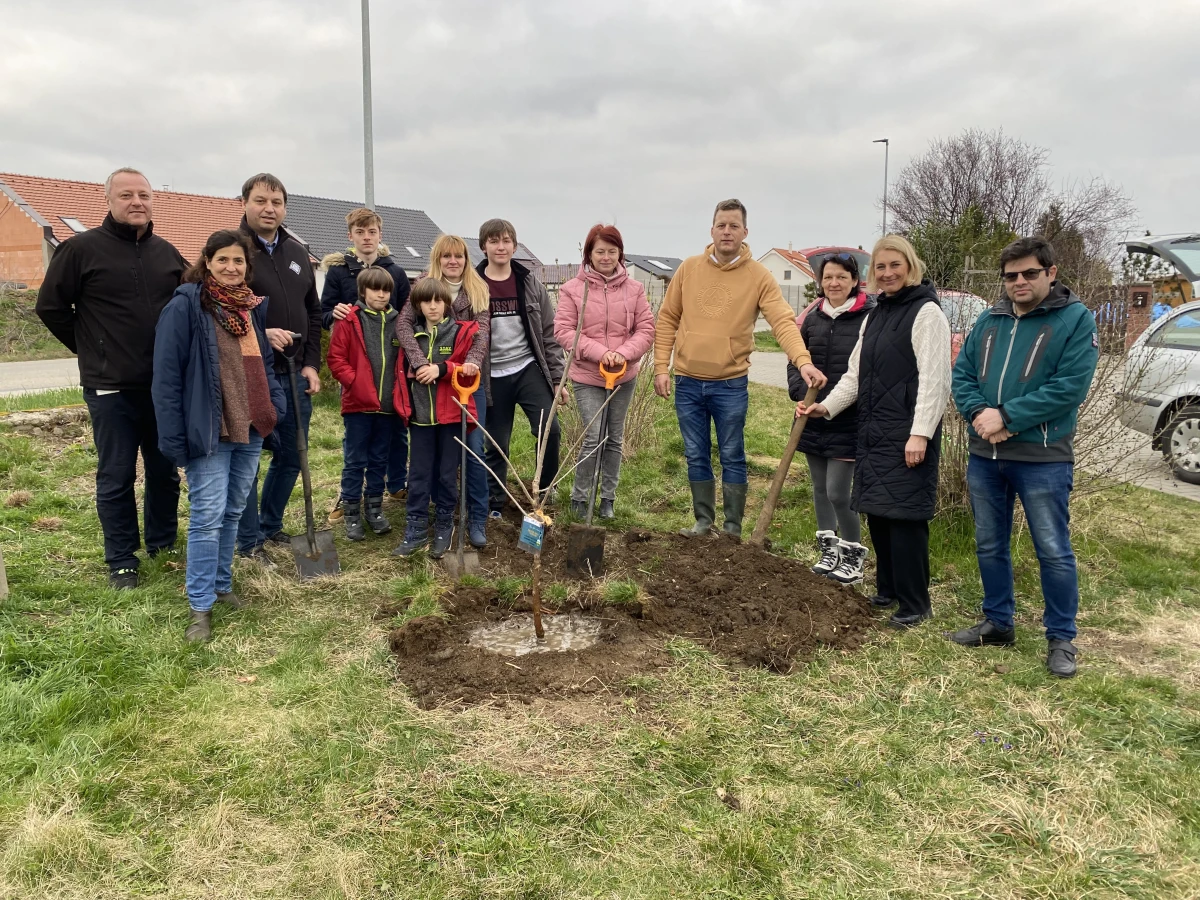
Examples include blue-green infrastructure, integrating vegetation and water systems into urban planning; Urban rainwater management systems, designed to reduce runoff and increase water retention; Energy efficiency measures, particularly aimed at reducing energy losses and heat stress in built environments; Landscape interventions, or the integration of nature-based solutions into spatial planning processes, such as tree rows, wetlands, retention zones and windbreaks to stabilize ecosystems.
In the Czech Republic, this approach was applied in municipalities such as Hodonín, Moravská Nová Ves and Prušánky, where the plans served as practical guidance for post-disaster recovery and long-term landscape resilience.

Participation and Co-Creation: Building Ownership
Another key factor for success was the consistent involvement of local stakeholders. Rather than presenting finished solutions, ELCA relied on dialogue formats: workshops with municipal staff, exchanges with experts, and participatory processes involving citizens. This approach helped to align technical solutions with local realities and increased acceptance of proposed measures. In practice, this meant addressing concrete questions: How can a municipality prioritize limited resources? Which measures are politically feasible? How can citizens be involved in implementation?
Students were also actively engaged, contributing to real-world tasks and gaining hands-on experience. This not only supported the project but also helped train the next generation of climate professionals.

Challenges: Structural Limits to Implementation
At the same time, the project revealed clear structural challenges. Political changes disrupted continuity in some cases. Limited administrative capacity and a shortage of qualified staff slowed down some implementation processes. In addition, climate action often competes with other urgent local priorities. There are also societal barriers - ranging from low awareness to scepticism towards new approaches. Institutional frameworks can further complicate the integration of innovative measures. These challenges underline a key point: climate governance requires long-term investment - not only in infrastructure, but in people, institutions, and processes.
International Exchange and Visibility
ELCA was actively embedded in international scientific and policy discussions. UPT presented project results at conferences such as TerraEnVision, EGU, ECCA, and MedGU, and shared in exchange formats reaching as far as Asia and the United States. This international engagement not only increased visibility but also helped refine approaches through external feedback and comparison with other regions.

Outlook: From Project Results to Structural Change
With the project completed, the foundations are in place - but the real work continues. The challenge now is to translate project outcomes into long-term strategies and routines. This includes Scaling up nature-based solutions; Integrating climate action into municipal planning processes; Maintaining and expanding cooperation networks and further developing participatory approaches.
Conclusion
ELCA demonstrates that effective climate governance is not defined by individual measures, but by the interaction of knowledge, institutions, and people. By combining training, institutional development, and practical implementation, the project offers a transferable model for other regions in Europe. Most importantly, it shows that climate action becomes impactful when it is locally rooted, institutionally supported, and collectively shaped.


