
Visiting Lower Austria and Vienna: Inspiration for resilience to heatwaves, drought, and floods
Published: Apr 8, 2026 Reading time: 3 minutes Share: Share an article“For twenty years, the system kept telling me why things wouldn’t work. Here, I saw that in practice they really do work and make sense.” These words from one of our study visit participants perfectly capture why we decided to visit Austria for inspiration. Together with municipal leaders, council members, and planning experts from the Podluží region, we sought inspiration on improving life in our municipalities and making them more resilient to extreme weather and climate change.
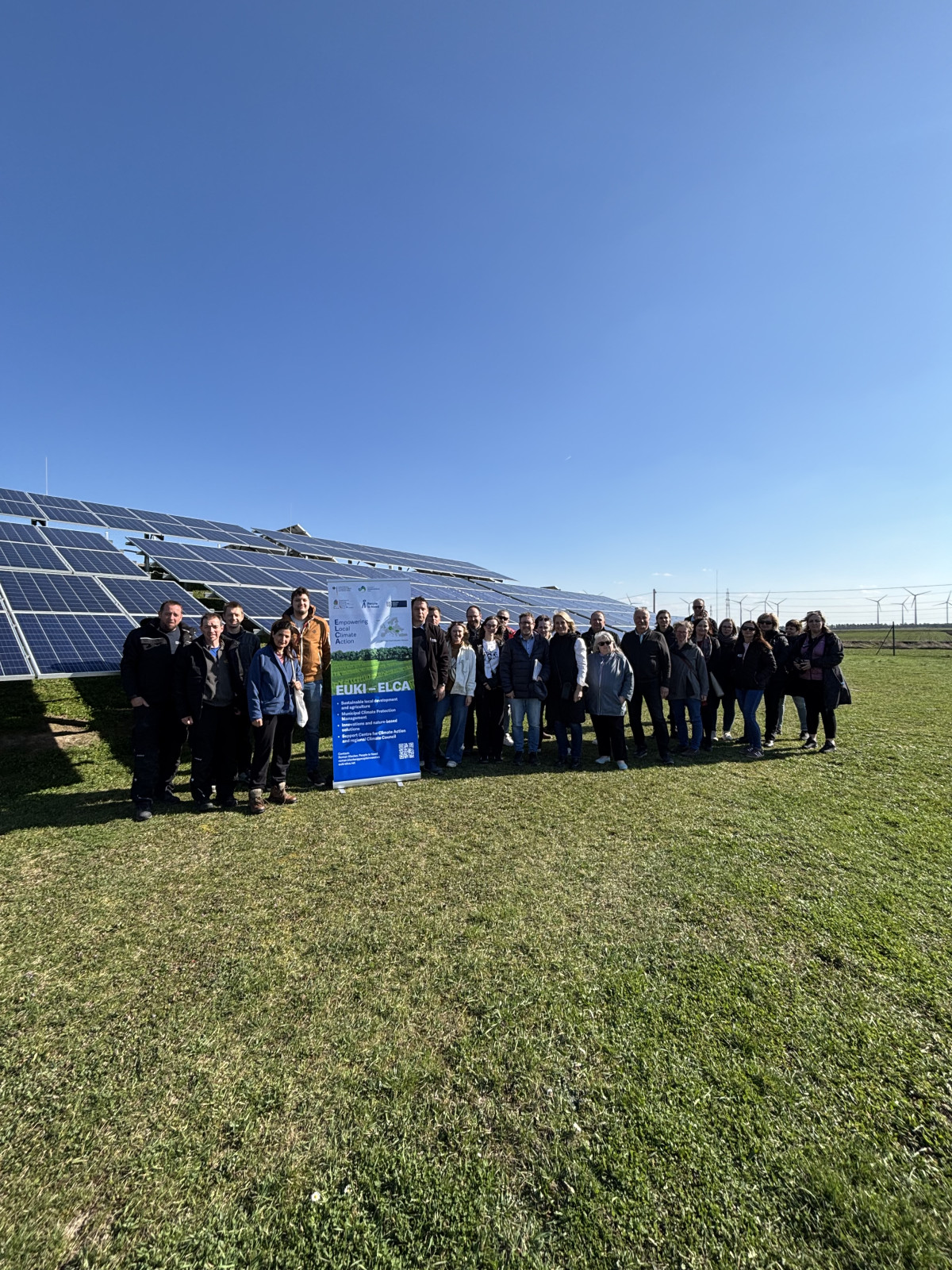
The two-day trip, organised in cooperation with the Czech Partnership Environmental Foundation as part of the EUKI ELCA project, sought to identify practical activities for places where we have worked since the devastating tornado of 2021.
From tornado recovery to forward-looking planning
In Podluží, we are no longer dealing only with the aftermath of the disaster. With the support of the municipality, we developed climate action plans, opened a Community Support Centre in Hodonín as a space for learning and exchange, and initiated many other activities.
“We started with post-tornado recovery, but we quickly realised that we need to look ahead. Our goal is to ensure that municipalities are prepared for what is becoming increasingly frequent—whether it’s extreme heat, drought or flash floods. Examples from Austria showed us that ideas do not have to remain on paper; they can work in reality. They can help prevent or mitigate the impacts of climate change, save municipal budgets, and improve the quality of life for local people,” explains project manager Roman Klecker, who coordinates our activities in the region.
Energy owned by the community
In Wolkersdorf, we visited wind turbines part-owned by local residents and businesses. Their investment has already paid off several times over, and local’s benefit from cheaper energy as a result.

We also saw a wastewater treatment plant that is partly energy self-sufficient thanks to its own photovoltaic system.

“Sponge cities” instead of overheated asphalt
In Mistelbach and Vienna, we explored the so-called “sponge city” concept. Instead of trees growing from small openings in pavements, they have large underground spaces (at least 12 cubic metres per tree). Filled with a special substrate, these spaces act as sponges, absorbing rainwater, which the tree can then use.


“Thermal imaging confirmed that under the canopy of such trees, temperatures can be tens of degrees lower than on the surrounding asphalt. At the same time, this reduces the costs of irrigation and maintenance,” said Clarissa Knehs from the City of Vienna.
Water as an ally
In Böheimkirchen, we observed the revitalisation of the Michelbach river following flash floods in September 2024. Instead of forcing the river back into a narrow, reinforced channel the solution here was more sensitive. The newly formed riverbed was largely preserved and slightly adjusted, with gravel bars, wide retention areas, a system of stone weirs, new meanders, and a cooling and recreational zone.
During heavy rainfall, these adaptations safely retains excess water and sediment, while at the same time serving as a space for sports, recreation, and cooling off during hot days.

Our study visit demonstrated that sustainable practices are within reach for any municipality that wants to manage its resources wisely.
“I particularly appreciated the practical examples of measures, which confirmed their feasibility. It was also valuable to connect with other participants and to see a well-chosen range of topics,” one participant noted in the final evaluation.
Others highlighted the importance of education for colleagues who have not yet worked with such measures: “One of the ways we implement our adaptation strategy is through educating our staff in these areas. I will continue to look for further learning opportunities for my colleagues.”
The knowledge gained will now be translated, together with municipal leadership, into projects in the Podluží region. Our goal is to make smart practices a natural part of our streets, squares and gardens.


